
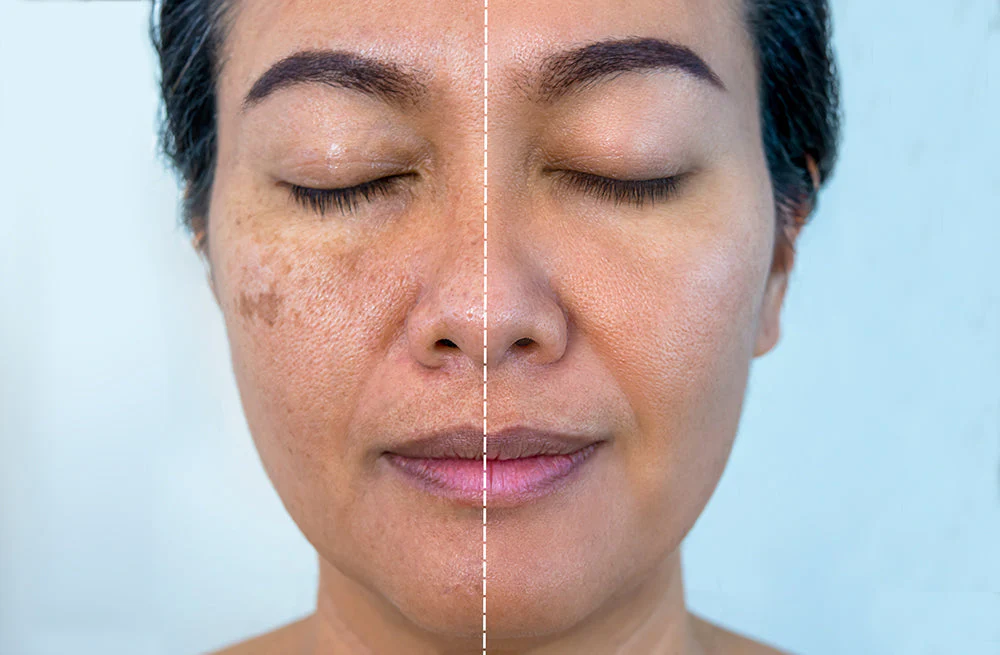
Hyperpigmentation is one of the most misunderstood skin concerns. From dark spots to melasma and post-acne marks, uneven skin tone often feels stubborn and unpredictable. Unfortunately, misinformation and outdated advice can quietly sabotage your progress, even when you’re investing time and money into skincare.
Understanding what not to believe is just as important as knowing what works. Let’s break down the most common hyperpigmentation myths that may be holding your skin back.
Myth 1: Hyperpigmentation Is Only a Cosmetic Problem
Many people treat hyperpigmentation as a surface-level issue, but that’s misleading. Pigment production happens deep within the skin, often triggered by inflammation, UV exposure, hormones, or injury.
When pigmentation is approached only with makeup or harsh exfoliation, the root cause remains unaddressed. This often leads to recurring or worsening dark spots over time.
What actually helps
-
Identifying triggers like sun exposure or acne inflammation
-
Supporting the skin barrier, not stripping it
-
Using treatments consistently over time
Myth 2: The Darker the Spot, the Stronger the Treatment Needed
It’s tempting to believe that stubborn pigmentation requires aggressive solutions. In reality, overusing strong acids or bleaching agents can backfire, especially on sensitive or deeper skin tones.
Excess irritation can trigger more melanin production, a process known as post-inflammatory hyperpigmentation.
Better approach
-
Start with gentle, pigment-regulating ingredients
-
Increase strength slowly and strategically
-
Prioritize skin comfort and barrier repair
Myth 3: Sunscreen Doesn’t Matter If You’re Indoors
This myth quietly destroys progress. UV rays penetrate windows, and even short sun exposure can darken existing spots or create new ones.
Without daily sun protection, brightening products lose effectiveness, no matter how advanced they are.
Key reminder
-
Broad-spectrum sunscreen is non-negotiable
-
Reapply if sitting near windows or using screens
-
Sun protection prevents pigment from becoming permanent
Myth 4: Natural Remedies Are Always Safer
DIY treatments like lemon juice, baking soda, or undiluted essential oils are often promoted as “natural cures.” While they sound harmless, they can severely disrupt the skin barrier and worsen pigmentation.
Natural doesn’t automatically mean gentle or effective.
Safer alternatives
-
Professionally formulated botanical extracts
-
Clinically tested brightening agents
-
Products with balanced pH levels
Myth 5: Hyperpigmentation Can Be Fixed Overnight
Skin cycles take time. Expecting instant results often leads to product hopping or overuse. Pigment fades gradually, usually over weeks or months, depending on depth and cause.
Quick fixes usually result in irritation, setbacks, and disappointment.
Healthy expectations
-
Early improvements appear in texture and clarity
-
Dark spots fade unevenly before fully blending
-
Consistency matters more than speed
Myth 6: Only People With Dark Skin Get Hyperpigmentation
While deeper skin tones are more prone to visible pigmentation, hyperpigmentation affects all skin types and colors. Lighter skin may show redness or brown patches differently, but the underlying process is similar.
Believing this myth can delay proper care and prevention.
Everyone benefits from
-
Sun protection
-
Inflammation control
-
Gentle, targeted treatments
Myth 7: Once It’s Gone, It’s Gone Forever
Even after successful fading, pigmentation can return if triggers resurface. Maintenance is essential, especially for conditions linked to sun exposure or hormones.
Stopping all preventive care often leads to relapse.
Long-term strategy
-
Continue sunscreen daily
-
Maintain a simplified brightening routine
-
Avoid unnecessary irritation
How These Myths Slow Your Progress
Believing the wrong advice can:
-
Increase inflammation and pigment production
-
Damage the skin barrier
-
Waste time on ineffective solutions
-
Create frustration and inconsistency
Correcting misinformation is often the turning point in achieving clearer, more even-toned skin.
Frequently Asked Questions
1. Can stress make hyperpigmentation worse?
Yes, chronic stress can increase inflammation and hormonal imbalances, both of which may trigger or worsen pigmentation.
2. Is exfoliating every day good for fading dark spots?
No. Over-exfoliation can damage the skin barrier and cause more pigmentation, especially in sensitive skin.
3. Does blue light from screens contribute to hyperpigmentation?
Emerging research suggests prolonged blue light exposure may worsen pigmentation in some skin tones, making protection increasingly important.
4. Can hyperpigmentation fade on its own?
Some superficial spots may fade over time, but deeper pigmentation usually requires consistent care to improve.
5. Are dark spots and melasma the same thing?
No. Dark spots are often caused by sun or acne, while melasma is hormonally driven and typically more persistent.
6. Should I stop using brightening products if my skin gets irritated?
Yes. Irritation can worsen pigmentation, so it’s important to pause, repair the barrier, and reintroduce products gradually.
7. Is hyperpigmentation prevention easier than treatment?
Absolutely. Preventing pigment formation through sun protection and inflammation control is far easier than reversing established spots.